How the Romans tricked the gods
To declare war, Roman priests had to hurl a spear into enemy territory. When Pyrrhus was too far away, Rome bought its way to a solution — literally.





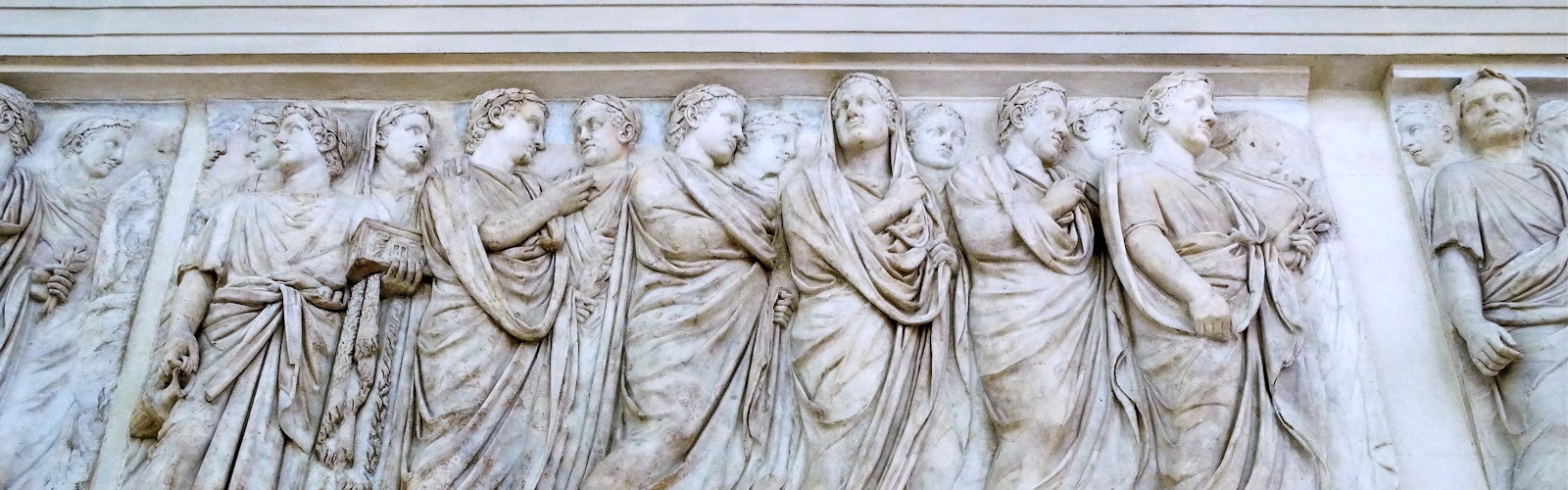
How the Romans Tricked the Gods: The Strangest War Declaration in History
The Romans were many things — conquerors, engineers, lawmakers. But above all, they were bureaucrats of the divine. They didn't just go to war. They filed a formal request with the gods first. And when the gods' rules became inconvenient, they didn't break them. They found a loophole.
This is the story of how Rome declared war on an enemy across the sea by inventing a real estate transaction so absurd it would make a modern lawyer blush.
Curious about Roman history? Book an Ancient Rome Private Tour! Our expert Rome private local guides will take care of everything! A free pick-up from your accommodation is included with most of the experiences on our website!
The Fetiales: Rome's War Priests
In ancient Rome, war was not simply a political decision — it was a sacred act. No military campaign could begin without the approval of the gods, and that approval required a specific ritual performed by a specific priesthood: the Fetiales.
The Fetiales were an elite order of priests drawn from the patrician class. Their job was to ensure that every war Rome fought was a bellum iustum — a just war, sanctioned by divine authority. Without their ritual, a war was considered impious, and an impious war was one the gods might punish rather than support.
The process was elaborate. When Rome had a grievance against a neighboring state, the Fetiales would select one of their own — the pater patratus — to serve as official envoy. Robed in priestly garments, carrying a scepter and a flint stone sacred to Jupiter, he would travel to the enemy's border and formally declare Rome's complaints. First to the first person he encountered, then at the city gates, then before the rulers themselves.
If the enemy failed to offer satisfaction within 33 days, the pater patratus returned to the border and performed the indictio belli — the formal declaration of war. He hurled a blood-tipped spear made of cornel wood into enemy territory, pronouncing a solemn curse. Only then could the legions march.
It was theater, diplomacy, and religion fused into a single act. And for centuries, it worked perfectly — as long as the enemy lived next door.
The Problem with Pyrrhus
In 280 BCE, Rome found itself on the verge of war with King Pyrrhus of Epirus, a formidable Greek general whose kingdom lay across the Adriatic Sea, on the coast between modern Greece and Albania. Pyrrhus had landed in southern Italy with his army and his war elephants, and Rome needed to respond.
There was just one problem: the Fetiales couldn't throw a spear into Epirus. It was too far away. The ritual required physically standing on enemy soil and launching the weapon across the border. You can't do that when the border is an entire sea.
For a civilization less devoted to ritual, this would have been a minor inconvenience — skip the ceremony, send the legions. But the Romans didn't operate that way. A war without the proper rites was a war without the gods. And a war without the gods was a war Rome could lose.
So they got creative.
The Greatest Legal Fiction in Roman History
The Roman Senate ordered a small unit of soldiers to cross the Adriatic and capture a man from Epirus. Not a general, not a nobleman — just a man, anyone from Pyrrhus's territory. They brought him back to Rome.
Once in the city, the prisoner was compelled to buy a small piece of land near the Temple of Bellona, the goddess of war. The transaction was legally binding. The land now belonged to a citizen of Epirus.
The Senate then immediately declared this plot of land ager hostilis — enemy territory. It was no longer Roman soil. It was, legally and religiously, a piece of Epirus sitting inside the walls of Rome.
The Fetiales walked to the plot. They performed the full ritual. The pater patratus raised his blood-stained spear and hurled it into the tiny patch of "foreign" ground. The gods were notified. The war was declared. The legions could march.
Rome had tricked its own gods — or, more precisely, it had followed the letter of divine law while completely ignoring its spirit. The ritual required enemy soil. Rome manufactured enemy soil. The gods, presumably, accepted the paperwork.
The Column That Made It Permanent
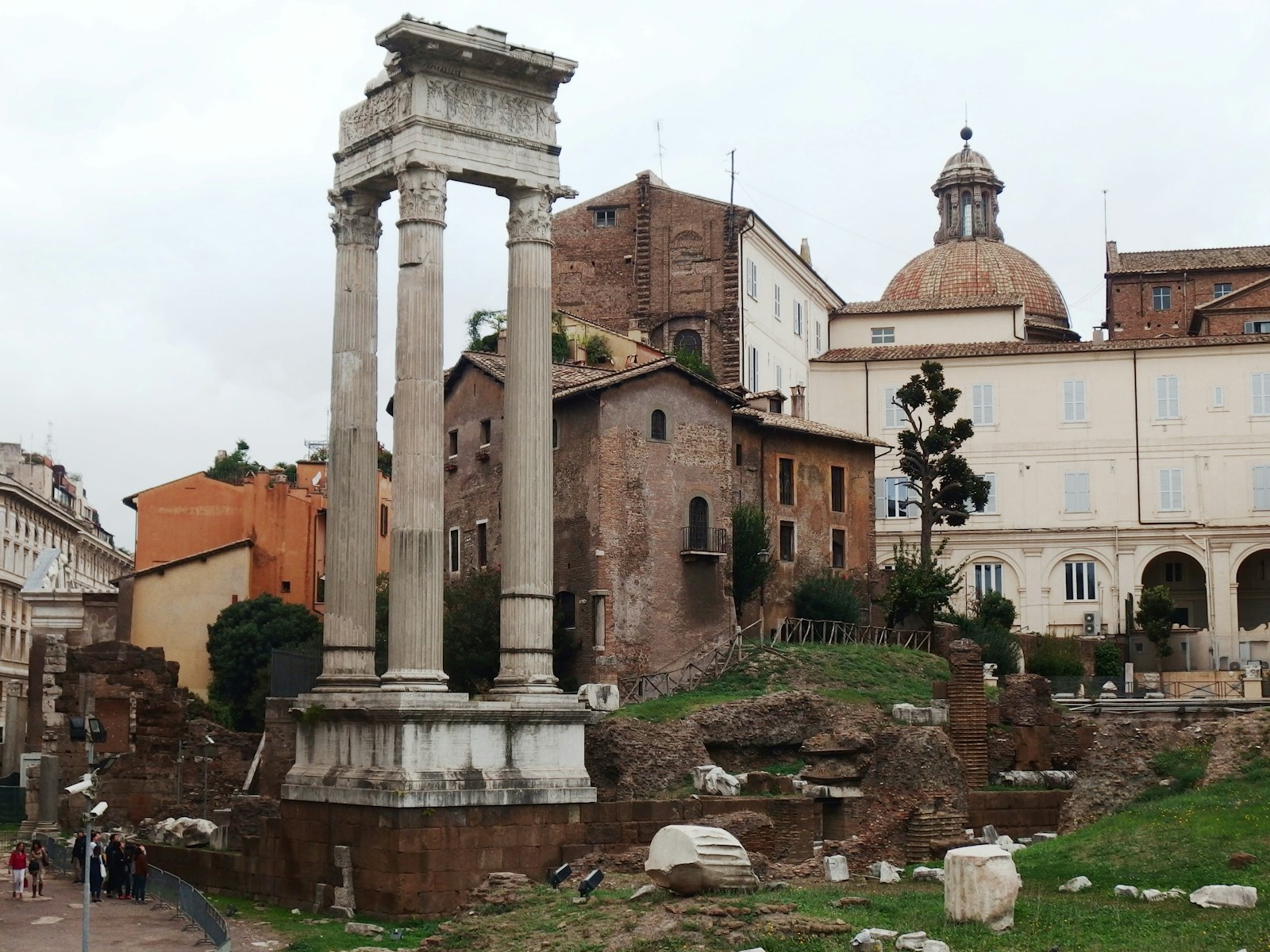
See the ashes of Bellona's temple during our Rome Jewish Ghetto with Synagogue Private Tour!
The trick worked so well that Rome decided to make it a permanent fixture. A column — the columna bellica — was erected near the Temple of Bellona to mark the spot. From that point forward, whenever Rome needed to declare war on a distant enemy — one whose borders couldn't be reached by a walking priest with a spear — the Fetiales simply went to the column and performed the ritual there.
The small patch of ground beside the Temple of Bellona became, in perpetuity, Rome's designated piece of "enemy land." It didn't matter whether the actual enemy was in North Africa, Gaul, or the eastern Mediterranean. The legal fiction held. The gods were satisfied. The wars were just.
It was, in its own peculiar way, brilliant. Rome had solved a theological logistics problem with a real estate transaction and a standing column, and in doing so had created a system that could scale with an expanding empire.
Where to Find the Traces
The Temple of Bellona stood in the Campus Martius, near what is now the Theatre of Marcellus in the area bordering the Jewish Quarter (Jewish Quarter). The temple itself hasn't survived, but the area still carries the weight of its history. Walking past the Theatre of Marcellus today, with its arches visible from the street, you're standing near the spot where Rome's priests hurled their spears into a fiction — and built an empire on the technicality.
The Roman Forum (Roman Forum) and the Capitoline Hill (Capitoline Hill), where the Senate debated and the gods were honored, complete the picture. The Forum was where the decision to go to war was debated. Bellona's temple was where it was made sacred. And the legions, once the spear hit the ground, marched from there into history.
It tells you something essential about the Roman mind. They believed in their gods deeply enough to never skip the ritual. But they were pragmatic enough to rewrite the rules when the ritual got in the way. Faith and cunning, piety and ambition — in Rome, they were never opposites. They were partners.
Can't find a private tour of the Theatre of Marcellus? Did you know that with CityEyes Private Tours, you can add extras to pretty much every private tour we offer?
Check our Rome Private Walking Tour, and choose among a vast selection of extras to add to your experience!