A 3-Day Rome Itinerary, Designed by True Locals
This itinerary is different—it's designed by people who actually live here, who know which lines move fastest, which neighborhoods feel best at different times of day, and how to experience Rome's highlights without the exhaustion that comes from treating the city like a checklist.





Introduction
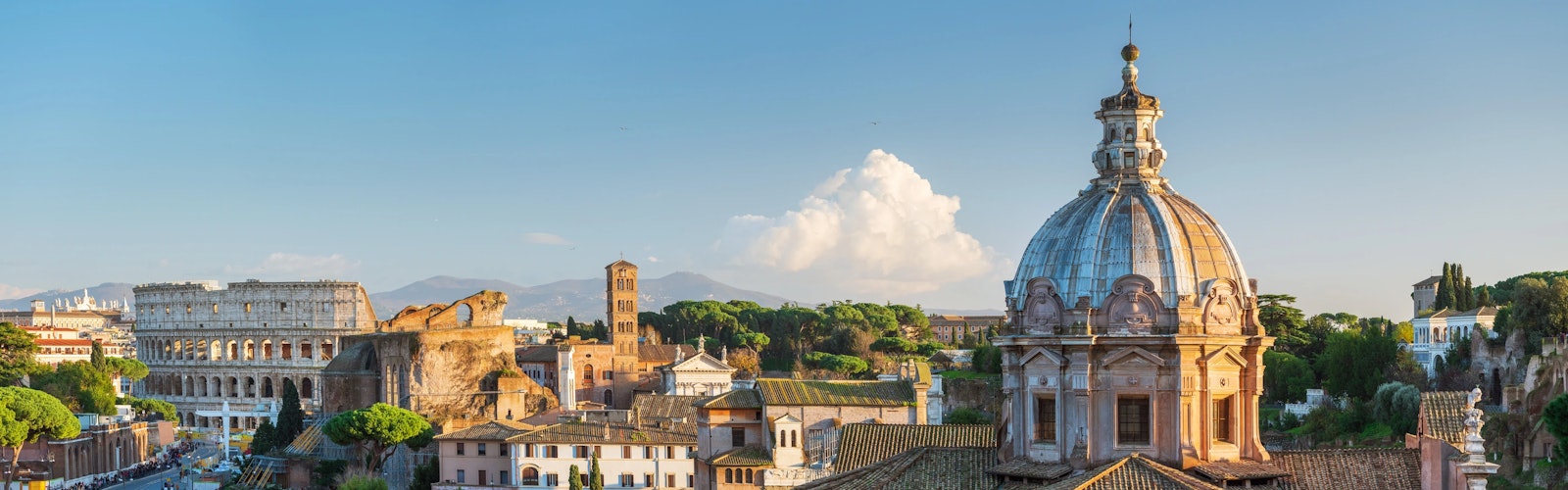
Rome can feel overwhelming. With nearly 3,000 years of history packed into one city, it's easy to get lost in guidebook recommendations that try to cram too much into too little time. This itinerary is different—it's designed by people who actually live here, who know which lines move fastest, which neighborhoods feel best at different times of day, and how to experience Rome's highlights without the exhaustion that comes from treating the city like a checklist.
Three days gives you enough time to see Rome's essential sites while still leaving room to breathe, eat well, and actually enjoy yourself. This isn't a sprint through monuments—it's a balanced approach that mixes major attractions with neighborhood exploration, iconic landmarks with local lunch spots, and structured sightseeing with casual wandering.
We've organized each day geographically to minimize transit time and maximize your experience. You'll start early when crowds are lighter, break for proper lunches at places Romans actually eat, and end each day in neighborhoods that come alive in the evening. This is Rome at a sustainable pace—the way locals would show it to visiting friends.
Do you wish for a zero-stress experience? Check our Rome Private Tours!
Day 1: Ancient Rome and the Historic Center
Your first day tackles Rome's ancient core and its most famous piazzas, moving from the Colosseum through the heart of the historic center to the Trevi Fountain and Spanish Steps.
Colosseum, Roman Forum, and Palatine Hill
Start your Roman experience where the city's power was most dramatically displayed. The Colosseum, Roman Forum, and Palatine Hill form a single archaeological area that tells the story of ancient Rome from its imperial spectacles to its political heart to its legendary founding.
Arriving early makes an enormous difference—not just for smaller crowds, but for the quality of light and the relative quiet that lets you actually absorb what you're seeing.
The Colosseum at 8:30am is a completely different experience from the Colosseum at noon - that's why we created the Colosseum Arena Early Morning Private Tour!
Duration of Visit
Plan for 2.5 to 3 hours minimum to see all three sites properly. The Colosseum itself takes about 45 minutes to an hour, the Roman Forum requires at least an hour to understand what you're looking at, and Palatine Hill deserves another hour for both the ruins and the views. Rushing through in less time means you'll see everything and remember nothing.
Are you missing time? You don't want to spend 3 hours of your holiday wandering through the Forum?
Check our Colosseum Express Private Tour, and see the Colosseum in 90 minutes!
Opening Hours
Summer hours (March 1st to October 26th): 8.30 AM to 6.30 PM
Winter hours (October 27th to February 26th): 8.30 AM to 4.30 PM
Last entry is typically one hour before closing. The archaeological area can be brutally hot in summer and surprisingly cold in winter—plan accordingly.
Types of Tickets
This is where things get interesting. Not all Colosseum tickets are equal:
Standard tickets grant access to the Colosseum's first and second levels, plus the Roman Forum and Palatine Hill. You'll see the monument from spectator viewpoints, but you won't access special areas.
Arena floor access lets you stand where gladiators fought, looking up at the seating tiers from the psychological centre of the building. The perspective shift is profound.
Underground access takes you into the hypogeum—the tunnel network beneath the arena where gladiators waited, and animals were caged. This is where you see the mechanical systems that powered the spectacles.
These tickets are extremely limited and difficult to obtain.
Attic level access provides the highest viewpoint in the Colosseum, offering unique perspectives on the structure and panoramic city views.
Like the underground, these tickets are rare and highly sought after.
SUPER sites access is included in every ticket but the standards. SUPERs grant special access to areas at both the Roman Forum and Palatine Hill—sections that most visitors never see, including restricted zones that provide different perspectives on ancient Roman life.
Where to Get Tickets
Book online well in advance through the official Colosseum website (coopculture.it). Standard tickets should be booked at least a week ahead; special access tickets (underground, attic) often require booking 30 days in advance due to limited daily availability.
Avoid buying from unauthorized resellers or street vendors—you'll pay more for tickets that may not work.
You can purchase tickets from the Colosseum's official website.
Can't find any ticket for the Underground section? Book a Colosseum Underground Private Tour!
Do's and Don'ts
Do bring water, especially in summer. There are filling stations inside, but lines can be long.
Do wear comfortable shoes. You'll be walking on ancient stones, uneven surfaces, and steep inclines—this isn't the place for new shoes or heels.
Do start with the Colosseum, then move to the Forum, then Palatine Hill. This flow works best with crowd patterns and gives you the Forum during optimal light.
Don't bring large bags or backpacks. Security screening takes longer, and storage options are limited.
Don't expect much shade. The archaeological area offers limited protection from the sun or rain.
Don't skip the Roman Forum thinking it's "just ruins." With proper context, it's actually more fascinating than the Colosseum because you see how the Romans actually organised their civic life.
Don't buy tickets or tours outside the Colosseum. You will encounter lots of street sellers, who usually sell tickets or tours at triple the price. Avoid this kind of scam.
Don't touch anything inside the Colosseum, the Roman Forum or the Palatine Hill. Everything inside the Colosseum is 2000+ years old - don't lack respect and don't touch anything! Climbing or writing on walls is against the rules, and you could get a big fine and be expelled from Italy forever.
Book a Colosseum Tour and get a free transfer
With CityEyes, when you book a private tour, you get a free transfer from your accommodation to the tour site.
Book now!
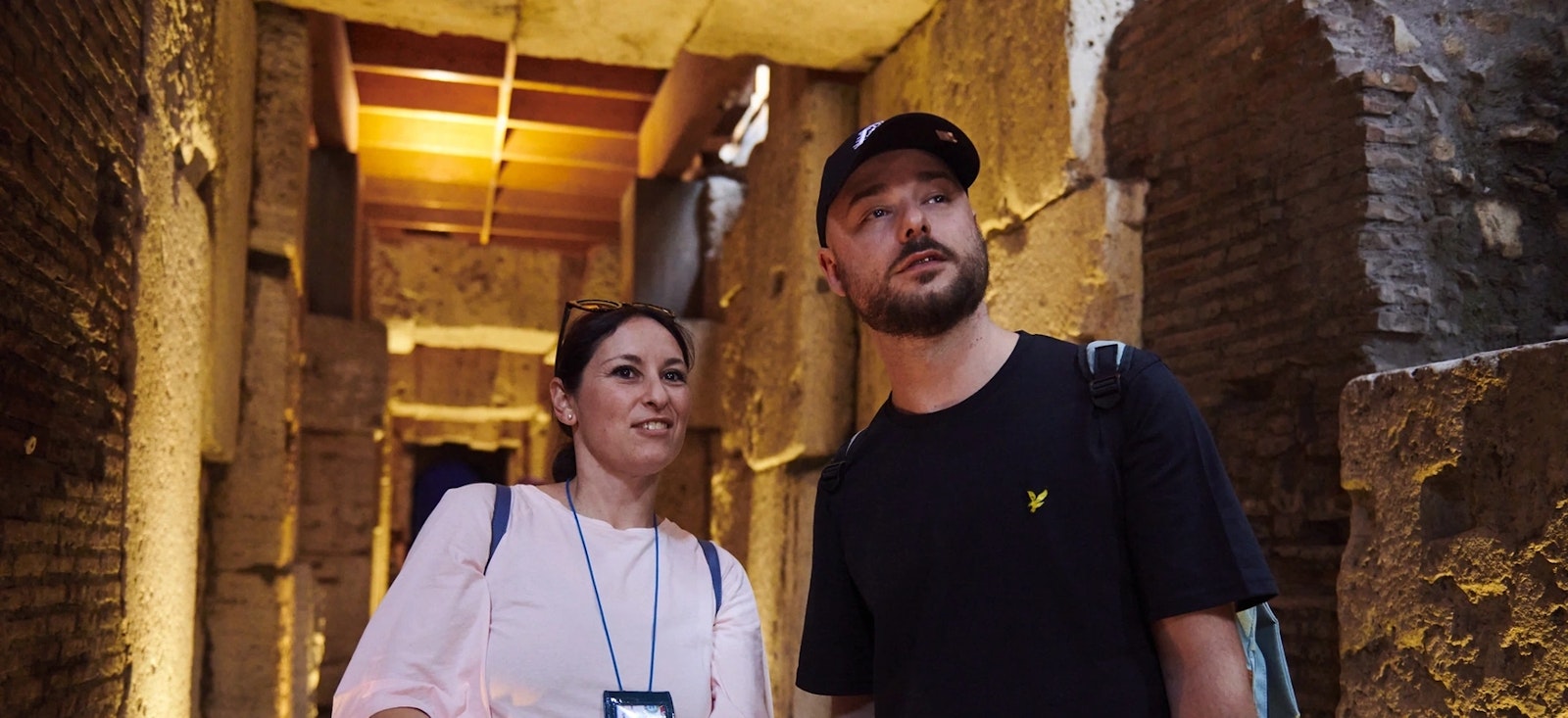
Feel like a Gladiator by booking a Colosseum Underground Private Tour.
Piazza Venezia
After the ancient sites, walk to Piazza Venezia—it's impossible to miss thanks to the massive white marble Vittoriano monument dominating the square. While the monument itself (officially the Altare della Patria) divides opinion aesthetically, the piazza serves as Rome's central hub where multiple major streets converge.
You don't need to spend long here, but it's worth understanding its significance as the spot where ancient, Renaissance, and modern Rome physically intersect. The views from the Vittoriano's terrace are excellent if you want to splurge on the elevator ticket, but it's optional.
First Day Lunch Break
By now you've been walking for hours and need real food, not a tourist trap panino.
Antico Forno Roscioli
Located near Campo de' Fiori, Antico Forno Roscioli is a proper Roman bakery that's been family-run since the 1970s. This is where locals actually buy their bread and grab quick lunch—not a restaurant trying to look authentic, but an actual neighborhood institution.
The pizza al taglio (pizza by the slice) is outstanding, especially the pizza bianca with mortadella. You can also get sandwiches made to order, baked goods, and takeaway pasta. There's limited seating, but many people buy and eat standing or take their food to Campo de' Fiori to sit.
Expect lines during lunch rush, but they move quickly. Cash and cards are both accepted.
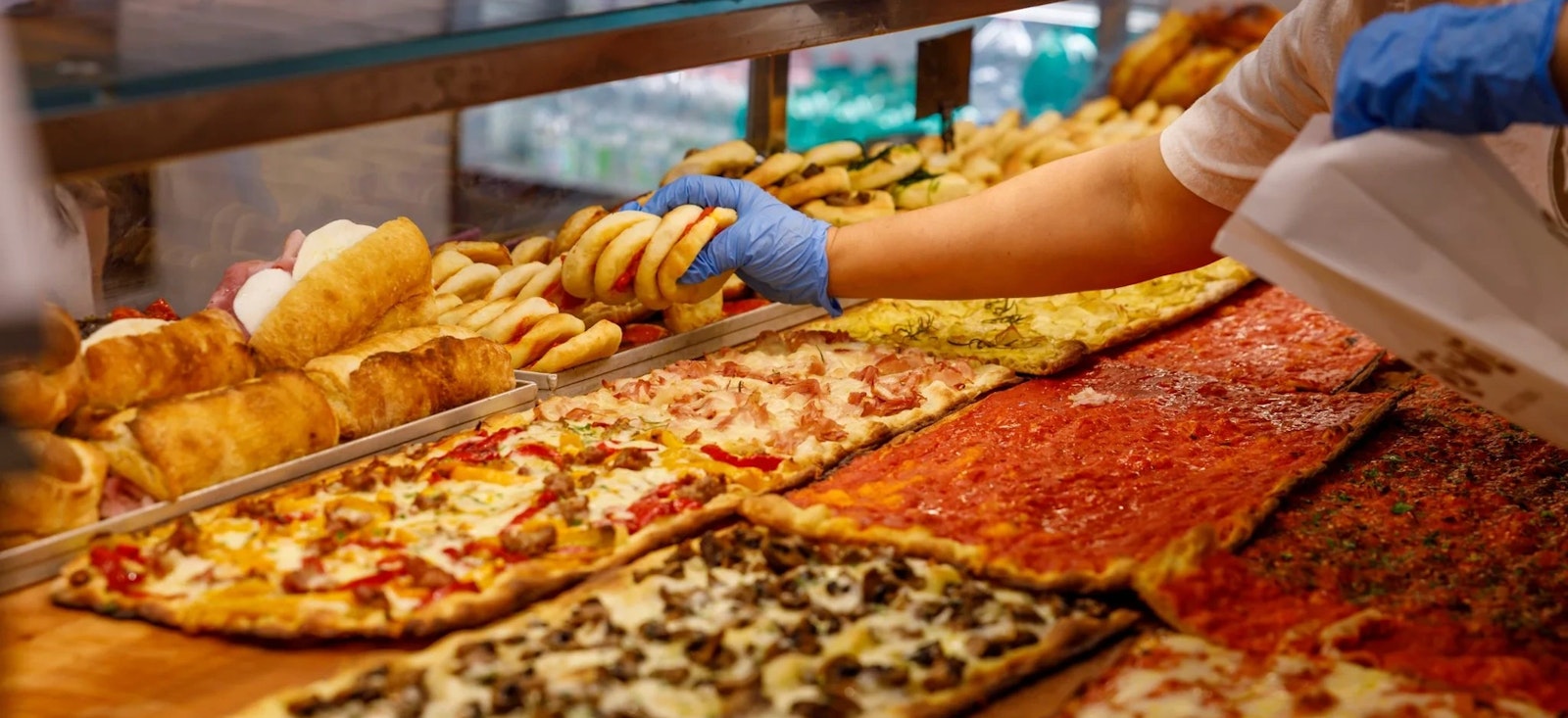
Make sure to try Roscioli's "Pizza Rossa".
Campo de' Fiori
Five minutes from Roscioli, Campo de' Fiori hosts Rome's most atmospheric market each morning. By afternoon, when you arrive, the market stalls are gone but the piazza remains lively with cafes, street performers, and the ever-present statue of Giordano Bruno, burned at the stake here in 1600 for heresy.
The square has real Roman character—less polished than Piazza Navona, more authentic in its mix of locals and visitors. Surrounding streets contain excellent wine bars and small shops if you want to explore.
Piazza Navona
A short walk brings you to Piazza Navona, built on the footprint of an ancient stadium and now Rome's most theatrical public square. Bernini's Fountain of the Four Rivers dominates the center, its dramatic figures representing the Nile, Ganges, Danube, and Rio de la Plata—the four corners of the world as understood in the 17th century.
The piazza embodies baroque Rome at its most exuberant. Three fountains, the church of Sant'Agnese, and surrounding palaces create an outdoor room that's been a gathering place for centuries. Yes, it's touristy, but it's touristy for good reason—the space simply works, aesthetically and socially.
Street artists, portrait painters, and living statues perform here constantly. The cafes are overpriced but the people-watching is free.
Pantheon
Another few minutes on foot brings you to the Pantheon, which somehow manages to be both Rome's best-preserved ancient building and one of its most underestimated. The dome remains the world's largest unreinforced concrete span nearly 2,000 years after construction—a feat of engineering that wasn't matched until the 20th century.
The building looks modest from outside, which makes stepping inside even more powerful. Light pours through the central oculus, moving across the interior as the day progresses. The proportions are mathematically perfect—the dome's height equals its diameter, creating a space that feels both massive and harmonious.
Opening Hours
The Pantheon is open from 9 AM to 7 PM. Lines form outside but move steadily. Expect 15-30 minute wait during peak times.
Where to Get Tickets
Entry recently became ticketed (it was free for centuries). Book through the official website or buy on-site. The ticket is inexpensive and helps manage crowd flow inside.
Trevi Fountain
From the Pantheon, navigate the narrow streets toward the Trevi Fountain. You'll hear it before you see it—the square is always crowded, and the fountain's water provides constant background sound.
The fountain is bigger and more theatrical than photos suggest, its white marble figures emerging from the palazzo behind it in a composition that blurs the line between architecture and sculpture. Tradition says throwing a coin over your shoulder into the water ensures your return to Rome. Whether you believe that or not, the fountain is genuinely spectacular, especially if you can see it at different times of day.
Yes, it's mobbed with tourists. Yes, you have to deal with selfie sticks and vendors. It's still worth it. Try to appreciate it as Romans have for centuries—as public art that belongs to everyone, not just to those who get there first or push to the front.
Spanish Steps
End your first day at the Spanish Steps, a ten-minute walk from Trevi. The steps themselves connect Piazza di Spagna with the Trinità dei Monti church above, creating one of Rome's most photographed views.
The area around the Spanish Steps represents luxury Rome—designer boutiques line Via Condotti and surrounding streets, while the steps themselves have been a gathering place since the 18th century. You can't sit on the steps anymore (recently banned to prevent damage), but the piazza below remains lively into the evening.
The neighborhood excels for evening walks, aperitivo, or window shopping, even if you're not buying. This is where the first day ends—you've moved from ancient Rome through the baroque center to the elegant shopping district, covering centuries and styles in a single day of walking.
Rome in 3 hours?
Book a Rome city center private tour and select your private guide, free.
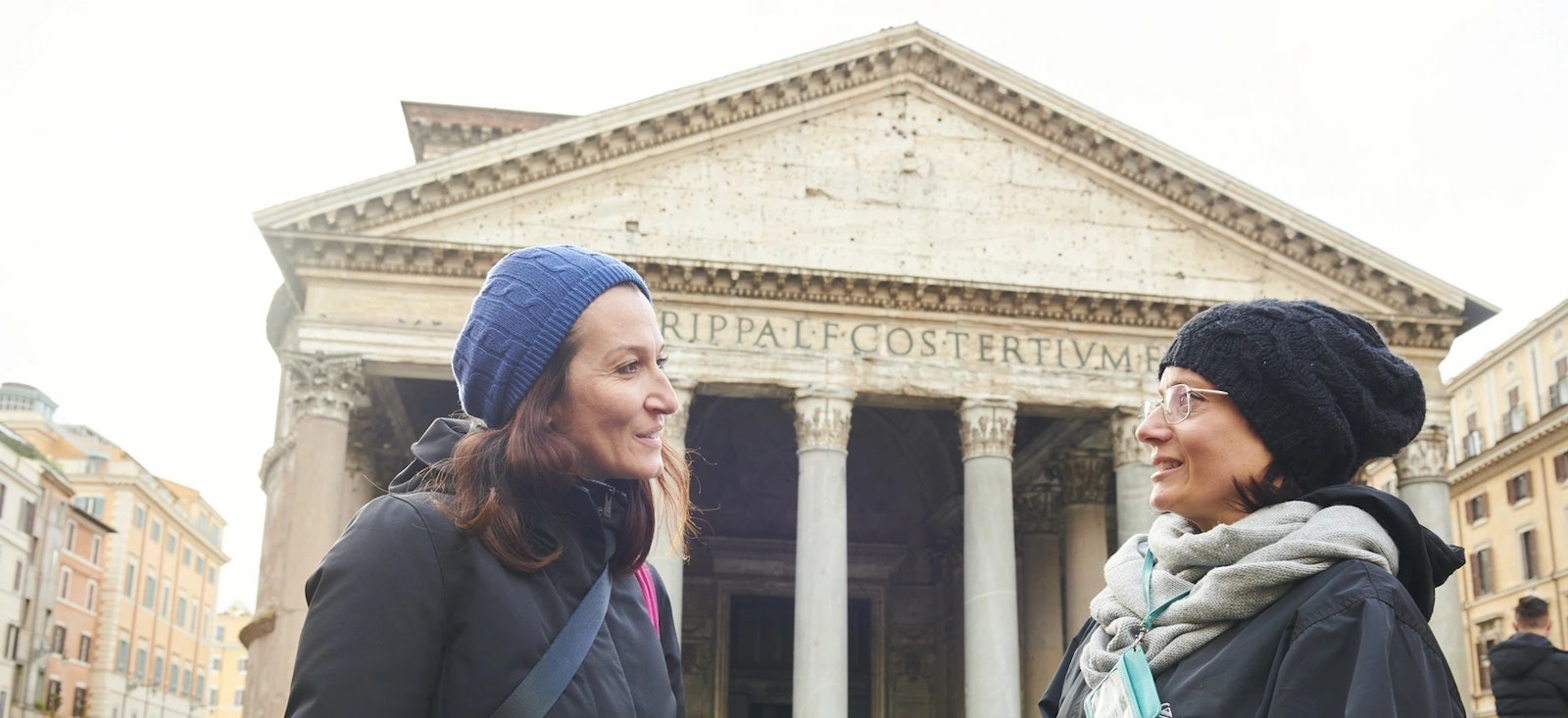
Our special guide Eleonora, during a Rome's Squares and Fountains Private Tour.
Day 2: Vatican City and Castel Sant'Angelo
Your second day focuses on Vatican City—technically a separate country but practically integrated into Rome. This is where you'll encounter some of the world's greatest art collections, architectural masterpieces, and the spiritual center of Catholicism.
You don't want to wander into the Vatican Museums without a guide, do you?
Check our Vatican Museums Private Tours!
Vatican Museums & Sistine Chapel
The Vatican Museums contain centuries of accumulated treasures—art collected by popes, archaeological finds, Renaissance masterpieces, and contemporary works all housed in papal palaces. The collection is overwhelming in scope, which is exactly why you need a strategy.
Most visitors make the mistake of trying to see everything, then arrive at the Sistine Chapel exhausted and unable to properly appreciate it. Don't do this. The Vatican rewards focus over completeness.
Early entry makes an extraordinary difference here. The museums at 8 am versus 11 am are completely different experiences—one allows contemplation and space, the other feels like crowd control.
On that note, you should check our Vatican Museums Early Morning Private Tour!
Duration of Visit
Plan for 3 to 4 hours minimum. This includes walking the main route through the galleries, spending proper time in the Sistine Chapel, and moving at a pace that allows actual looking rather than just passing through.
If you're an art enthusiast who wants to explore deeply, you could spend an entire day here. For most visitors, 3-4 hours hits the balance between seeing the highlights and not burning out before the Sistine Chapel.
Also, consider that once you've visited the Sistine Chapel, you can't access the Scala Regia (unless you're with a tour guide), which is a special shortcut that brings you from the Sistine Chapel to St. Peter's Basilica, skipping the church's line.
Don't want to waste time in line, trying to access St. Peter's Basilica? Check our Vatican Museums Private Tours.
Opening Hours
Opens at 8 AM and closes at 8 PM.
You can find the official opening calendar here. Be sure to check it since there will be many exceptions.
The museums are closed on Sundays except for the last Sunday of each month, when entry is free, which means impossibly crowded. Plan accordingly.
Where to Get Tickets
Book directly through the official Vatican Museums website (museivaticani.va). Book as far in advance as possible—weeks for standard tickets, months for early access.
Same-day tickets occasionally become available but don't count on it, especially during peak season. The line for those without reservations can be hours long.
Do's and Don'ts
Do wear appropriate clothing. Shoulders and knees must be covered—this rule is strictly enforced. You'll be denied entry otherwise.
Do bring water. You'll be walking for hours through climate-controlled but crowded galleries.
Do pace yourself. Stop and sit when you need to. There are benches throughout, and taking breaks prevents the exhaustion that ruins the Sistine Chapel experience.
Do look up in the Gallery of Maps. Most people focus on the maps themselves and miss the elaborate ceiling frescoes.
Don't bring large bags or backpacks. Storage is available but adds time and hassle.
Don't take photos in the Sistine Chapel. It's prohibited and guards enforce this strictly.
Don't talk in the Sistine Chapel. Guards will shush you—and should. The space deserves quiet contemplation.
Don't rush through the earlier galleries trying to get to the Sistine Chapel. The entire route contains masterpieces worth seeing properly.
St. Peter's Basilica
You can exit the museums and walk to the basilica entrance in St. Peter's Square.
If you're with a tour guide, you can easily access the Basilica, skipping the line, thorugh the Scala Regia.
St. Peter's is the world's largest church and the spiritual center of Catholicism, but even for non-religious visitors, the artistic and architectural achievement is staggering. Michelangelo's dome dominates Rome's skyline, while the interior contains works by the Renaissance's greatest masters.
The sheer scale impresses immediately—this building was designed to overwhelm, to physically manifest the Church's power and reach. Whether or not you respond to its spiritual purpose, the ambition and execution are undeniable.
Duration of Visit
Budget 1 to 1.5 hours for the basilica itself. This allows time to see Michelangelo's Pietà, Bernini's baldachin over the main altar, the dome (if you climb it), and the overall space without rushing.
If you climb to the dome's top, add another 45 minutes to an hour. The climb is worth it for the views and the experience of being inside Michelangelo's architectural masterpiece, but it's strenuous—over 500 steps, some quite narrow and claustrophobic.
Do's and Don'ts
Do dress appropriately. Same rules as the museums—covered shoulders and knees, strictly enforced.
Do take time to look at details. The sheer size means you can easily miss smaller masterpieces.
Do climb the dome if you're physically able. The views are spectacular and the interior perspective on the dome's construction is fascinating.
Do visit the crypt beneath the basilica (included with entry). It contains papal tombs and the supposed site of St. Peter's grave.
Don't bring large bags. Security is thorough and storage isn't convenient.
Don't expect quick entry during peak hours. Security lines can be long, especially mid-morning.
Don't rush. This is one of Christianity's most important sites and a masterpiece of Renaissance architecture—give it the time it deserves.
Book a Vatican Museums Private Tour
Visiting the Vatican Museums looks too complicated or stressful?
CityEyes is here for you.
Click the button and discover plenty of Vatican Museums Private Tours.
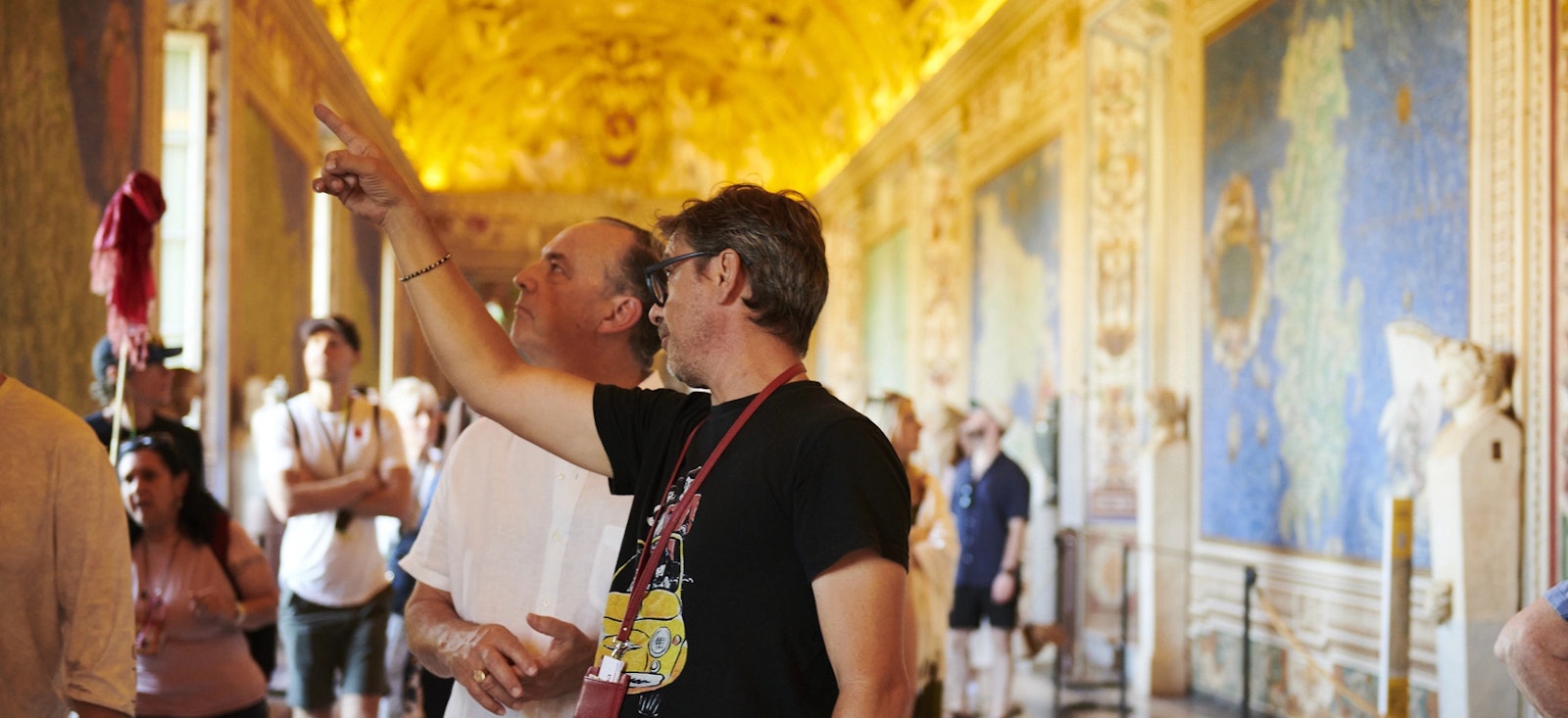
Our walking encyclopedia, Marco, during a Vatican Museums Early Morning Private Tour.
Second Day Lunch Break
After hours in the Vatican, you need proper food. Skip the tourist traps around St. Peter's and head to Bonci Pizzarium, about a 10-minute walk away.
Bonci Pizzarium
Gabriele Bonci is Rome's most famous pizza al taglio maker, and his pizzeria near the Vatican represents pizza taken to an art form. This isn't traditional Roman pizza—it's creative, inventive, and uses premium ingredients in combinations you won't find elsewhere.
The pizza is sold by weight—point to what you want, they cut it and weigh it. The toppings change based on what's in season and Bonci's inspiration. Potatoes and mozzarella might sound simple, but the execution is perfect. More adventurous combinations work surprisingly well.
Expect lines, especially at lunch. It's worth the wait. There's limited seating inside and on the sidewalk, or you can take your pizza and eat nearby in one of the small parks.
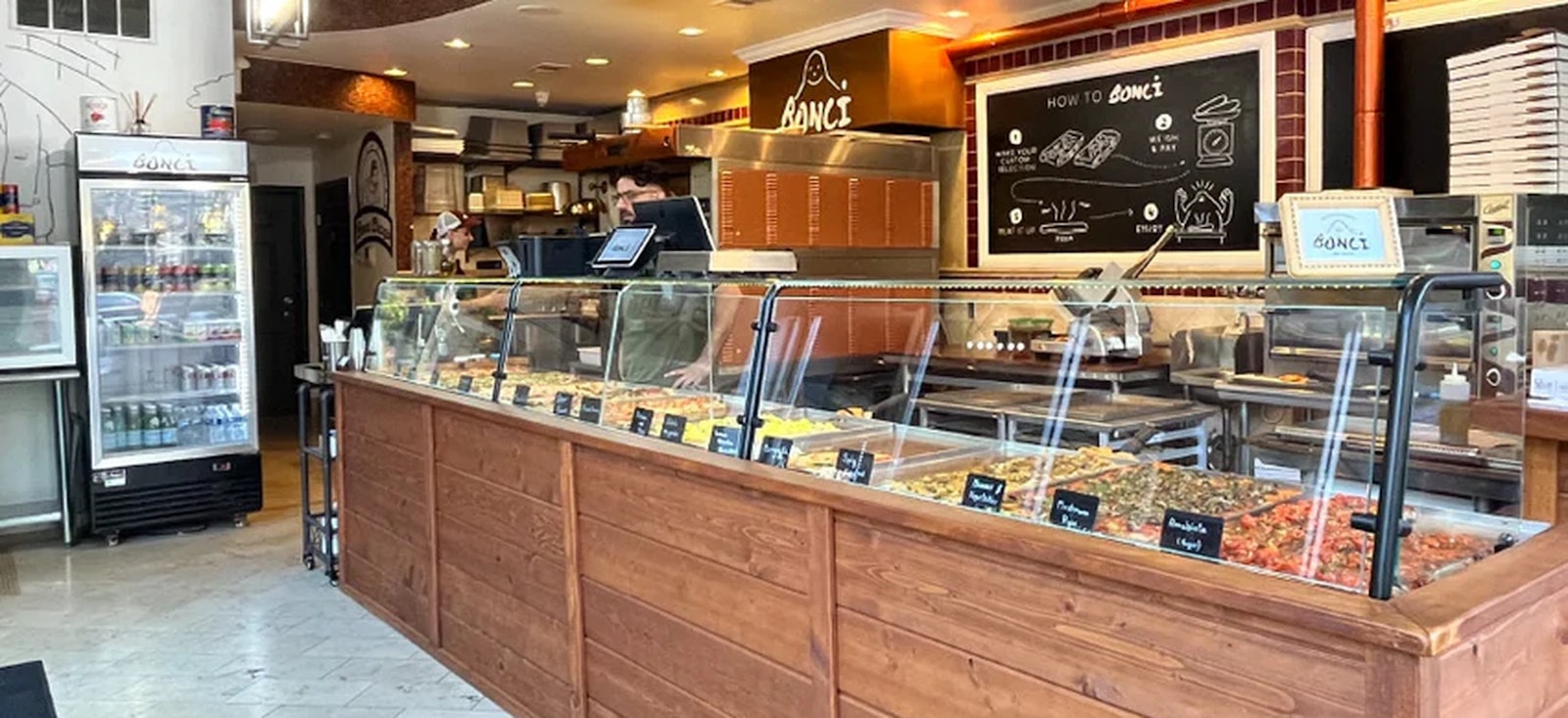
World-famous Bonci's Pizzarium - make sure to stop here for a gourmet pizza tasting.
Castel Sant'Angelo
After lunch, walk to Castel Sant'Angelo—it's about 15 minutes on foot from the Vatican area, passing over the Ponte Sant'Angelo with its Bernini-designed angel statues.
Originally built as Emperor Hadrian's mausoleum in the 2nd century, the building has served as fortress, papal residence, prison, and now museum. The structure embodies Rome's layered history—ancient foundations, medieval additions, Renaissance apartments, and baroque decoration all stacked on top of each other.
The route through the castle spirals upward through different historical periods, emerging onto the terrace at the top where you get 360-degree views across Rome. On a clear day, you can see from the Vatican to the city center to the Alborean Hills beyond.
The castle's interior contains papal apartments, a collection of weapons and armor, prison cells, and the famous passetto—a covered corridor that connected the Vatican to the castle, used by popes escaping danger.
Buy tickets on-site or book online through the official website. Lines are typically manageable except during peak tourist season. The castle is rarely as crowded as major sites, making it a relatively relaxed experience after the intensity of the Vatican.
The view from the top terrace alone justifies the visit, but the building's evolution through Roman, medieval, and Renaissance periods makes it one of Rome's most fascinating structures for understanding how the city has continuously adapted its past to present needs.
Day 3: Villa Borghese, the Jewish Ghetto, and Trastevere
Your final day starts with art in one of Rome's most beautiful museums, then moves through the city's parks before exploring two of its most characteristic neighborhoods—the Jewish Ghetto and Trastevere.
Don't forget to check our Borghese Gallery Private Tour and our Rome's Jewish Ghetto Private Tour!
Galleria Borghese
The Galleria Borghese contains one of Rome's finest private art collections in one of its most elegant settings. Cardinal Scipione Borghese created this collection in the early 1600s, and it remains relatively intact—Bernini sculptures, Caravaggio paintings, and works by Raphael, Titian, and other masters displayed in rooms decorated with frescoes and classical details.
What makes the Galleria special is its intimacy. Unlike the Vatican's overwhelming galleries, this is a private villa where you can actually see the art properly. The limited visitor numbers and timed entry mean you never feel crowded, allowing the kind of focused looking that great art deserves.
Bernini's sculptures alone justify the visit—his "Apollo and Daphne" captures the moment of transformation with such technical skill that marble seems to become flesh, leaves, and movement. "The Rape of Proserpina" shows Pluto's fingers pressing into Proserpina's marble flesh with disturbing realism.
Caravaggio's paintings occupy several rooms, including "Boy with a Basket of Fruit," "David with the Head of Goliath" (where the severed head is reportedly Caravaggio's self-portrait), and other works that demonstrate why he revolutionised painting.
Duration of Visit
The museum enforces a 2-hour maximum visit. This is actually perfect—enough time to see everything properly without the exhaustion that comes from longer museum visits. The collection is focused enough that two hours allow for careful looking rather than rushing.
Do's and Don'ts
Do arrive exactly at your entry time. Late arrivals may be denied entry or have their visit time shortened.
Do take your time with individual works. The limited visitor numbers mean you can actually stand in front of sculptures and paintings without fighting for position.
Do look at the rooms themselves, not just the art. The villa's decorated interiors are part of the experience.
Don't bring large bags. Small bags are allowed but anything substantial must be checked.
Don't try to photograph everything. Some rooms prohibit photos, and guards enforce this.
Don't rush. Two hours is exactly right for this collection—use the full time.
Villa Borghese
After the museum, explore Villa Borghese, the park surrounding the Galleria. This is Rome's central park—not as famous as Villa Borghese but beloved by locals for jogging, picnicking, and escaping urban intensity.
The park contains several small museums, a lake with rowboat rentals, countless paths, and views across the city. It's a proper park, not just decorative green space—Romans use it constantly for exercise, relaxation, and socializing.
You can wander randomly or head directly to specific viewpoints. The park is large enough to feel spacious even when busy, with shaded paths perfect for Roman summer heat.
Passeggiata del Pincio
From Villa Borghese, make your way to the Pincio terrace—a large elevated viewpoint overlooking Piazza del Popolo with panoramic views across central Rome. This is where Romans have gathered for evening passeggiata (the ritual evening stroll) for generations.
The view encompasses the entire centro storico with St. Peter's dome visible in the distance. Late afternoon provides the best light for photographs and the most pleasant temperature for lingering.
The Pincio connects Villa Borghese with Piazza del Popolo via a monumental staircase—you can descend this way or take the more gradual paths.
Piazza del Popolo
At the base of the Pincio lies Piazza del Popolo, one of Rome's grandest public squares. The oval piazza features an Egyptian obelisk at its center, twin churches flanking Via del Corso, and the Porta del Popolo—the ancient northern gate that once welcomed visitors arriving from Florence and Venice.
The square has served as Rome's northern entrance for centuries. Its current form dates from the early 19th century, when neoclassical redesign created the sweeping space you see today.
It's worth stepping inside Santa Maria del Popolo church (the one on the left as you face away from the Pincio). Inside you'll find Caravaggio paintings—"The Conversion of St. Paul" and "The Crucifixion of St. Peter"—in the Cerasi Chapel, plus works by Raphael and Bernini. Entry is free and the church is rarely crowded despite containing masterpieces that would be star attractions elsewhere.
Are you in love with Caravaggio? Make sure to check our Caravaggio in Rome Private Tour.
Third Day Lunch Break
From Piazza del Popolo, you can walk (about 20 minutes), or take a taxi or public transport to the Campo de' Fiori area, where lunch awaits at Osteria da Fortunata.
Osteria da Fortunata
Fortunata is famous for one thing done exceptionally well: fresh pasta made by hand in the window where everyone passing can watch. The pasta is rolled, cut, and shaped to order, then cooked and served within minutes.
The menu is traditional Roman—cacio e pepe, carbonara, amatriciana—executed perfectly with pasta so fresh it's almost a different food from dried versions. The setting is casual, the atmosphere lively, and the value excellent for the quality.
Expect waits during lunch rush, especially on weekends. The restaurant doesn't take reservations, so arrive early or be patient. Watching the pasta-making while you wait is part of the experience.
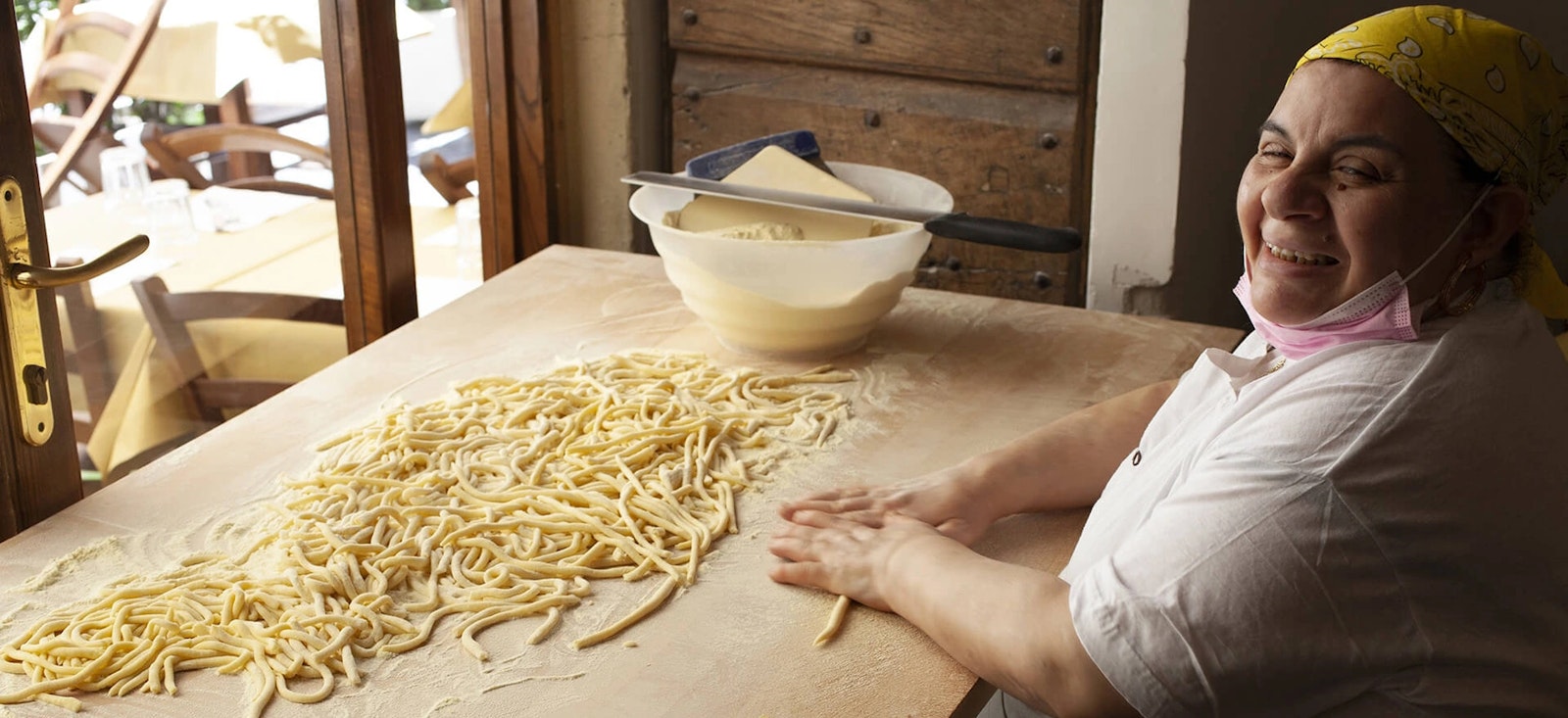
Make sure to stop by Fortunata and taste the world-famous pasta, freshly made every day from these beautiful nonnas.
Jewish Ghetto
After lunch, explore the Jewish Ghetto—one of Rome's most historically significant and currently vibrant neighborhoods. Rome's Jewish community is Europe's oldest continuous Jewish presence, dating back over 2,000 years to well before Christianity existed.
The Ghetto itself was established in 1555 when Pope Paul IV forced Rome's Jews into this small area near the Tiber, where they remained confined until 1870. The neighborhood retains strong Jewish identity through synagogues, kosher restaurants, bakeries, and shops.
Via del Portico d'Ottavia forms the Ghetto's main street, lined with restaurants serving Roman-Jewish cuisine—a unique culinary tradition blending Roman and Jewish influences. Artichokes prepared "alla giudia" (Jewish-style, deep fried) originated here and remain a neighborhood specialty.
The Great Synagogue, built in the early 1900s after the Ghetto's walls came down, dominates the skyline with its distinctive square dome. The building contains a museum documenting Rome's Jewish history—worth visiting if you have time and interest.
Are you looking for a private tour of Rome's Jewish Ghetto and Synagogue? We've got you covered!
Portico d'Ottavia
The Portico of Octavia, dating from the 2nd century BC, provides the neighborhood's most visible ancient ruins. The monumental entrance once led to a vast covered walkway enclosing temples and libraries. Now it's incorporated into medieval buildings, demonstrating Rome's continuous adaptation of ancient structures.
The archaeological layers here are remarkable—ancient columns supporting medieval walls, with Renaissance additions above and modern shops at street level. It's Rome's architectural history in a single structure.
Isola Tiberina
Walk to the Tiber and cross to Isola Tiberina (Tiber Island), Rome's only river island. The boat-shaped island has been associated with healing since ancient times—there was a Temple of Aesculapius here, and today a hospital continues the medical tradition.
Two ancient bridges connect the island to both riverbanks—Ponte Fabricio (from 62 BC, Rome's oldest surviving bridge) and Ponte Cestio. The island itself contains a church, the hospital, and public spaces popular with locals, especially on summer evenings when the Tiber-side bars and restaurants open their terraces.
It's a brief stop but offers pleasant views of the river and surrounding neighborhoods. In summer, the "Isola del Cinema" film festival takes over the island, screening movies on outdoor screens.
Trastevere
Cross to the west bank and enter Trastevere, perhaps Rome's most romanticized neighborhood. The name means "across the Tiber," and historically this was Rome's working-class quarter—now it's one of the most desirable areas, full of restaurants, bars, boutiques, and nightlife.
Trastevere's medieval street plan remains intact—narrow cobblestone lanes, small piazzas, ivy-covered buildings, and that particular Roman atmosphere where every corner seems to hide another restaurant or hidden courtyard.
Piazza Santa Maria in Trastevere anchors the neighborhood around a 12th-century church with stunning mosaics. The square fills with locals and visitors throughout the day and especially at night when restaurants spill tables across the cobblestones and street performers entertain the crowds.
Wander randomly—Trastevere rewards aimless exploration. Via della Lungara, Via della Scala, and the streets around Piazza San Calisto all contain excellent restaurants, wine bars, and artisan shops. The neighborhood shifts character throughout the day: quiet and local in the morning, increasingly lively through the afternoon, and bustling by evening.
For authentic Trastevere, venture beyond the main tourist streets to smaller lanes where neighborhood life continues as it has for generations. You'll find elderly residents sitting outside their homes, traditional shops that have served locals for decades, and the kind of everyday Roman life that makes the neighborhood special.
Gianicolo
End your three days in Rome at the Gianicolo (Janiculum Hill), rising above Trastevere. The hill provides the best panoramic views in Rome—spanning from the Vatican across the entire centro storico to the hills beyond.
The walk up takes 15-20 minutes from central Trastevere, climbing through quiet residential streets and parkland. At the top, a large terrace accommodates the crowds that gather for sunset, while the surrounding park contains monuments, fountains, and plenty of space for walking.
At noon, a cannon fires from the hill—a tradition since 1847 that marks midday for the city below. If you time your visit around this, you'll witness a piece of living Roman tradition.
The Gianicolo isn't one of Rome's famous seven hills (it's on the wrong side of the river), but its views surpass those from most official hills. Come for sunset if possible, when golden light washes across Rome's domes, monuments, and rooftops, creating exactly the view that brought you to Rome in the first place.
Conclusion
Three days in Rome is simultaneously too much and not enough. Too much because the sheer concentration of art, history, and architecture can overwhelm. Not enough because every neighborhood contains centuries more than you can possibly see in a long weekend.
This itinerary balances Rome's essential sites with the breathing room that makes travel pleasurable rather than exhausting. You've seen the Colosseum and Roman Forum, the Vatican Museums and Sistine Chapel, Galleria Borghese's masterpieces, and Rome's most beautiful piazzas. You've eaten at places Romans actually recommend, walked through neighborhoods with authentic character, and climbed to viewpoints that reveal the city's stunning geography.
What you haven't done is see everything—because that's impossible and would ruin the experience if you tried. Instead, you've seen enough to understand Rome's essential character, to appreciate why people return repeatedly, and to know what draws you back for your next visit.
Rome rewards return visitors. Now that you've experienced the highlights, your next trip can go deeper—specific museums, particular neighborhoods, day trips to nearby sites, or simply spending more time in places where you felt most connected.
The city will be here, largely unchanged despite constant tourist crowds, when you return. That's Rome's great gift—it has survived so much history that a few more years barely register. Take what you've learned from these three days and start planning your next visit. Rome always has more to show those who take time to look properly.
Can't make up your mind on whether to book a private tour or not? Check our "Are private tours in Rome worth it?" article!